OFFICIAL QISKIT FALL FEST HOST · WASHINGTON, DC
Qiskit
Fall Fest
Quantum without borders.
Join Catholic University and RIFT Labs for a new season of quantum discovery, hands-on learning, and community.
HOST UNIVERSITY
RESEARCH IN FUTURE TECHNOLOGIES


QISKIT COMMUNITY
01 / ABOUT THE EVENT
A place to start.
A community to grow.
Qiskit Fall Fest returns to The Catholic University of America in 2026, hosted by RIFT Labs. Join students, researchers, professionals, and curious minds for a welcoming event centered on learning, collaboration, and hands-on exploration of quantum computing.
Our program is being developed around technical talks, practical Qiskit tutorials, and collaborative activities. Discover the ideas behind quantum computation, work through code, and connect with people who share your curiosity.
You do not need to arrive as an expert. Bring your questions and a willingness to learn.
01
Learn the foundations
Make sense of qubits, quantum gates, and the ideas behind quantum algorithms.
02
Put ideas into code
Explore circuits and coding examples through guided, hands-on activities.
03
Find your community
Ask questions, exchange perspectives, and learn alongside fellow quantum enthusiasts.
02 / THE PROGRAM
Learn. Try. Make it your own.
A first look at the activities being planned for 2026. Session dates, times, speakers, and locations will be published here when confirmed.
01
TECHNICAL TALKS
Explore the ideas
Start with the big picture, then look more closely at the tools and questions shaping quantum computing.
Quantum computing and the Qiskit ecosystem
Foundations of quantum algorithms
Conversations with the quantum community
SESSION DETAILS COMING SOON
02
HANDS-ON TUTORIALS
Experiment with Qiskit
Move from concepts to circuits with practical demonstrations and opportunities to work through code.
Circuit-building and coding exercises
Algorithm and application examples
Guided practice and questions
SESSION DETAILS COMING SOON
03
COLLABORATIVE CODING
Build something together
Bring your curiosity to a shared coding activity. Challenge details will follow with the final program.
Beginner-friendly starting points
Collaborative problem solving
Coding challenge format to be announced
SESSION DETAILS COMING SOON
Program
| Time (EST) - DATE | Monday Nov 16th | Tuesday Nov 17th | Wednesday Nov 18 th | Friday Nov 20th |
|---|---|---|---|---|
| 10:00 - 11:00 AM | Quantum Kernels Speaker: Juan Guillermo Lalinde | A Hybrid Classical-Quantum Approach for Multi-Constrained Location Optimization Problem Speaker: Jorge Saavedra | Coding Challenge Office Hours | Coding Challenge Submission |
| 11:00 - 12:00 PM | Scalable Quantum Computational Science: Block Encoding and Polynomial Transformation Speaker: Kevin Joven | Quantum-enhanced optimization and machine learning via the Kipu Quantum Hub Speaker: Alejandro Gomez | ||
| 2:00 - 4:00 PM | Hands-on Coding with Qiskit Speaker: Daniel Sierra-Sosa | Coding Challenge - Start | ||
Speakers & Talks
Meet the speakers and explore the talks featured at this year’s event.
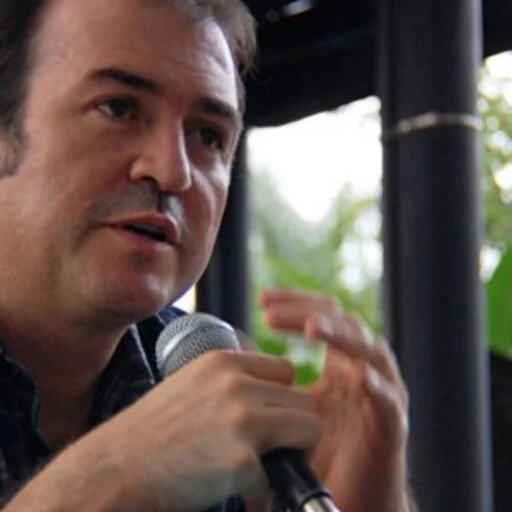
Quantum Kernels Introduction
JUAN G. LALINDE
Quantum kernel methods connect machine learning with quantum computing by representing data as quantum states. This talk will introduce their foundations, explain how quantum circuits can measure similarities between data points, and explore their application to classification problems. It will also discuss their potential advantages and the challenges posed by noise and current hardware limitations.
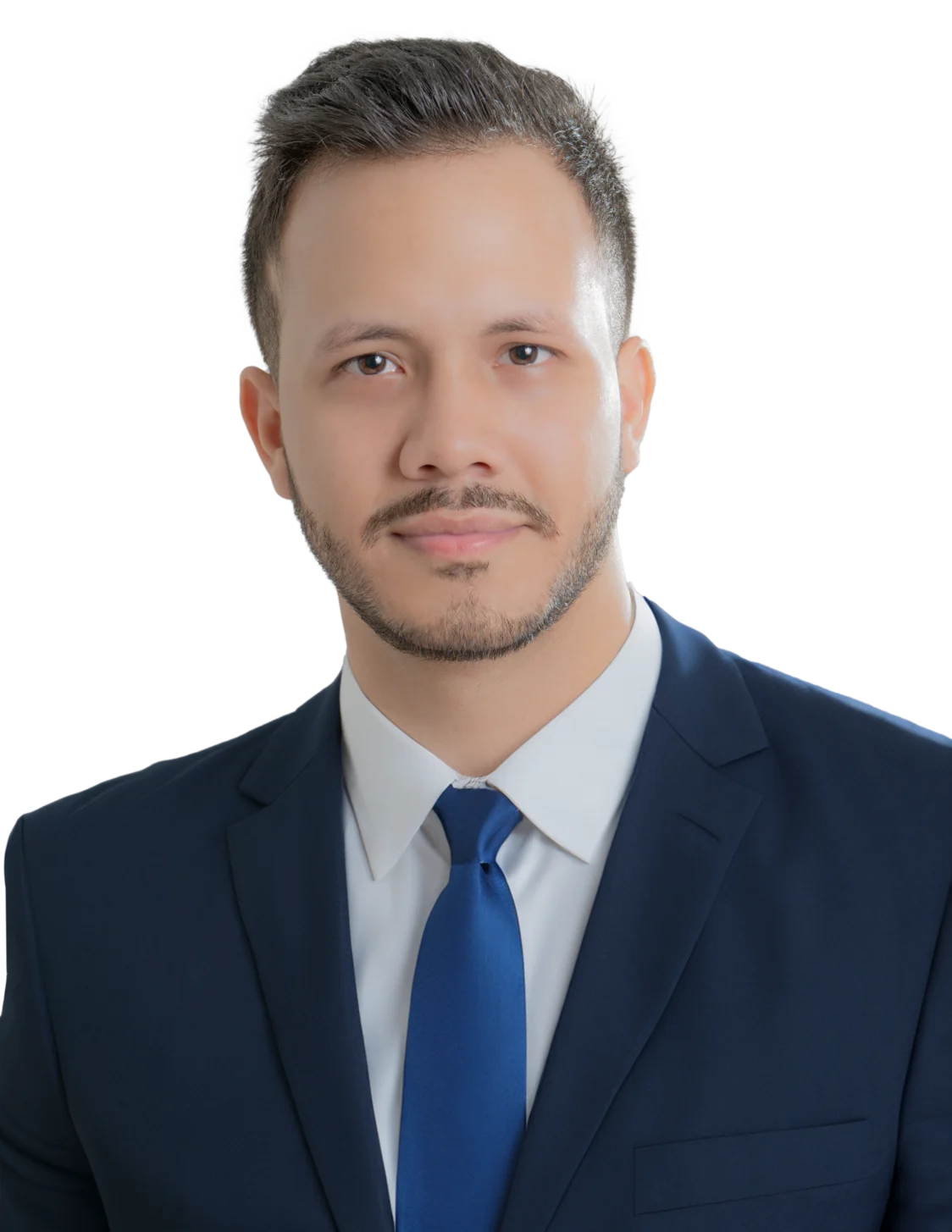
Scalable Quantum Computational Science: Block Encoding and Polynomial Transformation
KEVIN JOVEN
Quantum computing aims to improve current classical techniques for the simulation of relevant systems, hard optimization problems, factoring, etc. Most of the important algorithms in such areas can be described within a general framework that corresponds to polynomial transformations. Early work unified all of these algorithms under an approach known as quantum singular value transformation (QSVT). This framework relies on the ability to block-encode a given non-unitary operator and apply polynomial transformations to it. In this talk, we will discuss how these two techniques can be viewed as general building blocks for quantum applications. We will discuss analytical methods, approximate methods, and the advantages of each.

A Hybrid Classical-Quantum Approach for Multi-Constrained Location Optimization Problem
JORGE SAAVEDRA
The Maximal Covering Location Problem (MCLP) is an NP-hard combinatorial optimization problem in which a fixed number of facilities must be located to maximize covered demand. The multiconstrained formulation of the problem makes constraint embedding a crucial part of the workflow when addressing it using a QUBO-based approach.
This talk presents a hybrid classical-quantum framework based on the Quantum Approximate Optimization Algorithm (QAOA) that combines three techniques: Unbalanced Penalization (UP), which handles inequality constraints without additional slack variables; Linear Ramp (LR) scheduling, which reduces the number of variational parameters from 2p to two; and Warm-Start QAOA (WS-QAOA), which uses a classical relaxation of the original problem to construct an informed initial state.
The methods are evaluated on randomly generated MCLP instances under ideal simulation. Four configurations are compared using solution quality, optimal-solution probability, feasibility, and classical optimization cost, together with logical and transpiled circuit-resource analyses. The results demonstrate the potential of combining complementary techniques to improve the resource efficiency and optimization behavior of QAOA for constrained combinatorial problems.
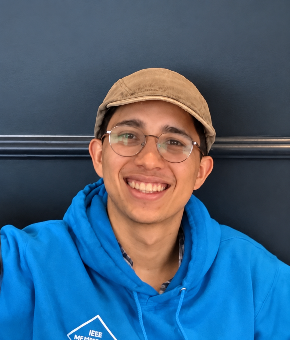
Quantum-enhanced optimization and machine learning via the Kipu Quantum Hub
ALEJANDRO GOMEZ
The applications of Quantum Computing for industrial problems is a fast-evolving field, where well-established classical methods typically exist. A viable path for current quantum computers, is to complement these advanced classical methods. In this talk, we will present our academic advances in quantum optimization and quantum machine learning, as well as its industrial equivalent via the Kipu Quantum Hub platform
03 / JOIN THE FEST
Your next quantum step starts here.
Registration for Qiskit Fall Fest 2026 will open soon. Dates, attendance options, and sign-up instructions will appear on this page.
04 / GOOD TO KNOW
A few things
before you join.
Still have a question? We are happy to hear from you.
Get in touch ↗Students, educators, researchers, professionals, and anyone curious about quantum computing are welcome. Activities are being planned for a range of experience levels.
No. Introductory activities will provide a starting point. Some coding sessions may benefit from basic Python familiarity; prerequisites will be listed with the final program.
The 2025 event was free to attend. Participation details for the 2026 edition will be confirmed when registration opens.
Plan to bring a laptop for coding activities. Any software setup, account requirements, and preparation materials will be shared with the final participation instructions.
The previous edition included hybrid sessions. Online and in-person attendance options for 2026 will be announced with the schedule; no meeting links are available yet.
The host institution is The Catholic University of America in Washington, DC. Building, room, and access details for 2026 will be posted with the confirmed program.
Please contact the organizing team at [email protected]. Let us know what would help you participate so we can discuss the available arrangements.
05 / GET IN TOUCH
Let’s talk quantum.
Questions about the event, collaboration, or accommodations? Reach out to the organizing team.
[email protected] ↗YOUR 2026 ORGANIZERS
Daniel Sierra-Sosa
The Catholic University of America · RIFT Labs
Jorge Saavedra Benavides
Qiskit Fall Fest 2026 co-organizer
Discover RIFT Quantum ↗